Tuesday, March 17, 2009
Eyeborg: WebCam in a Prosthetic Eye; Prostetic Finger with USB Drive
The Eyeborg Project takes Microsoft's SenseCam concept to the next level.
From the Eyeborg Project Website:
"Take a one eyed film maker, an unemployed engineer, and a vision for something that's never been done before and you have yourself the EyeBorg Project. Rob Spence and Kosta Grammatis are trying to make history by embedding a video camera and a transmitter in a prosthetic eye. That eye is going in Robs eye socket, and will record the world from a perspective that's never been seen before."
Jimmy Fallon Spoofs the Eyeborg Project from eyeborg on Vimeo. Jimmy insists that he received an Eyeborg when he had Lasix surgery to improve his eyesight.
CONCEPT DRAWING OF THE EYEBORG BY JOENIS NORAC
RELATED:
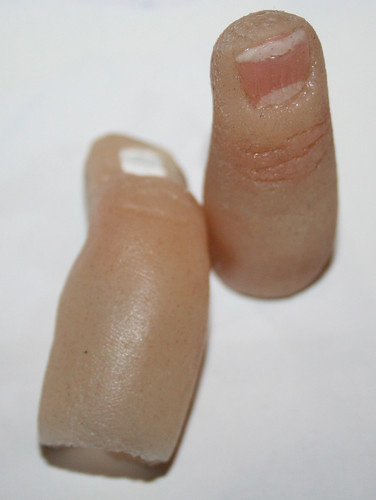
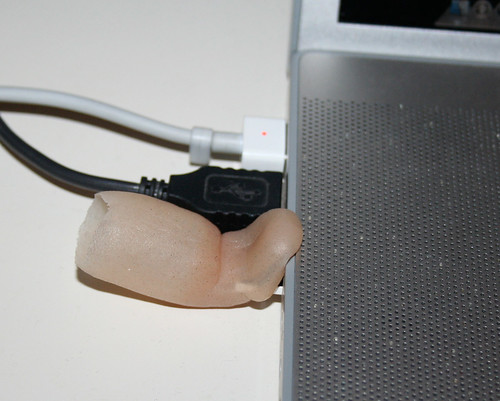
Finn Creates USB Finger Drive
Jerry Jalava, a computer programmer who lost his finger in an accident, created a prosthetic finger that contains a USB drive:




UPDATE: Microsoft's SenseCam Aids Memory Recall
From the
"SenseCam is a wearable digital camera that is designed to take photographs passively, without user intervention, while it is being worn. Unlike a regular digital camera or a cameraphone, SenseCam does not have a viewfinder or a display that can be used to frame photos. Instead, it is fitted with a wide-angle (fish-eye) lens that maximizes its field-of-view. This ensures that nearly everything in the wearer’s view is captured by the camera, which is important because a regular wearable camera would likely produce many uninteresting images."
New study proves that Microsoft's sensory innovation aids memory recall
Technology Review Article
Images from Microsoft Research:
SenseCam Videos
Research and Publications


