Saturday, September 26, 2009
Near Field Communication Touch Interaction
From the Interactive Multimedia Technology blog:
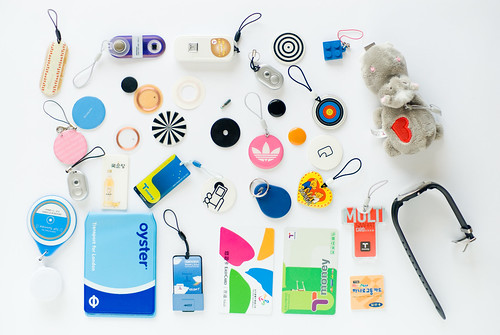
The Touch Project is based in the Interaction Design department of the Oslow School of Architecture and Design in Norway. "Touch is a research project that investigates Near Field Communication (NFC), a technology that enables connections between mobile phones and physical things. We are developing applications and services that enable people to interact with everyday objects and situations through their mobile devices. Touch consists of an inter-disciplinary team involved in social and cultural enquiry, interaction/industrial design, rapid prototyping, software, testing and exhibitions." -
Nearness Explores Interaction Without Touching
Nearness from timo on Vimeo.
iPhone RFID: Object-based media
iPhone RFID: object-based media from timo on Vimeo.

reTouch Info Sheet (pdf)
reTouch is part of the Touch project, and it " brings together hundreds of cross-cultural examples of social norms and values involving touch—all categorised according to actions related to touching. Using quotes from ethnographic accounts written between the late 1800s and the present, re/touch encourages designers and researchers to explore how touch is used by people to relate to one another and the worlds in which we live. Browse re/touch to create design briefs, refine interaction scenarios, devise game play, or otherwise think, make and do things touchrelated." -reTouch web info, Anne Galloway.
One of the members of the research team is Anne Galloway, a social researcher and the author of the purselipsquarejaw blog, which she recently resurrected after taking a year off from blogging.
Anne also contributes to the space and culture journal. I've followed Anne's writing for a while. Over the course of her Ph.D. studies, she has thought deeply about the intersections of technology, space, and culture, including cross-cultural meanings of touch.
RELATED
Inspiring Touch Related Interaction Design

Original Design Thinking Approach for Researching RFID
-Nikolas Nova, Pasta and Vinegar
Note: Nikolas Nova's Pasta and Vinegar blog is worth taking a look at if you are interested in design, UX, emerging technologies, pervasive/ubiquitous computing.
About Nikolas and his blog:
"User Experience researcher at LIFTlab. My work is about studying how people use various technologies and turn them into insights, ideas, prototypes or recommendations to inform design and foresight.This blog is a selection of the material that I collect, especially in fields such as mobility, urban environments, digital entertainment and new interfaces. I am also part of the near future laboratory."
Sample of Pasta and Vinegar Posts:
(Touch) Interaction Vocabulary
A Graphic Language for Touch-based Interactions


Monday, May 4, 2009
Pachube and the Internet of Things: Design, Ubicomp, RFID, and Usman Haque
I have a growing interest in the emerging "web of things", and figuring out how computers and gadgets can inter-operate more smoothly. This summer, I'm planning on playing with my RFID toys and learning more about wireless sensor networks. I can't wait until waiting for my MIR:ROR and Nabaztag arrive. I'm also looking forward to exploring the Pachube concept.
So what is Pachube?
Pachube: "A web service that enables people to tag and share real time sensor data from objects, devices and spaces around the world, facilitating interaction between remote environments, both physical and virtual."
You can sign up for Pachube on the web, and learn more about it by exploring the following links:
Pachube, Patching the Planet: Interview with Usman Haque
Ways to User Pachube
Pachube Website
Pachube Tutorials
Extended Environments Markup Language
EEML library for Processing
Pachube iGoogle Gadget: Create a monitoring dashboard
Usman Haque is an architect and director of Haque Design + Research.
"The domain of architecture has been transformed by developments in interaction research, wearable computing, mobile connectivity, people-centered design, contextual awareness, RFID systems and ubiquitous computing. These technologies alter our understanding of space and change the way we relate to each other. We no longer think of architecture as static and immutable; instead we see it as dynamic, responsive and conversant. Our projects explore some of this territory."
(cross-posted on the Interactive Multimedia Technology blog)
Wednesday, November 28, 2007
Mobile RFID by Samsung; Open Verizon Network?!
“This is a transformation point in the 20-year history of mass market wireless devices – one which we believe will set the table for the next level of innovation and growth,” said Lowell McAdam, Verizon Wireless president and chief executive officer. “Verizon Wireless is not changing our successful retail model, but rather adding an additional retail option for customers looking for a different wireless experience.”
InformationWeek
Samsung said it expects the radio-frequency identification "We are enabling anytime, anywhere mobile access to information," said Chihee Chung, senior VP of Samsung's Electronics System LSI Division, in a statement. "RFID chip readers systems allow consumers to pull context-specific information into their mobile devices while on the go. Our mobile RFID single-chip technology is an important step in the evolution of ubiquitous computing." My comments: Although Verizon and Samsung's efforts appear to move us closer to Weiser's vision of ubiquitous computing, we must keep in mind that with each advance in technology, there are a host of other problems, such as privacy and security, usability, and accessibility, that remain to be fully addressed!
What do you think?
Resource:
Information about the early history of Ubiquitous Computing




