Sunday, October 13, 2013
LINKFEST: Interactive Multimedia Technology, May through October 2013
Here are links to my Interactive Multimedia Technology posts from May 5th to October 13, 2013:
Leap Motion Update: Slow-going progress for me, at least for now!
Jay Leno's Interactive Pumpcast News: Will and Monifa Sims' 15 minutes of Karaoke Fame
Astronaut Chris Hadfield's Awesome Music Video from Space - in case you missed it!
Xbox One and Kinect 2 for the Playground of the Future
Summer of Fun and Game Development with Unity
Leap Motion and Google Earth Experiment: Cute Doggie Photo-globe Mashup
Interactive Displays and "Billboards" in Public Spaces; Pervasive Displays 2013
Stanford's "Coding Together: Developing Apps for iPhone and iPad" Cours Video Presentations on iTunesU
Drawing with Sounds, and Interactive Musical Drawing App Created with Processing
Monkeying Around with Autism Assessments: Kinect-based game by Vectorform and Kaiser Permanente therapists offers a barrel of possibilities!
The Life and Contributions of Seymour Papert: Inspiring video of a tribute panel, Interaction Design and Children Conference
Tablets at Work: AT&T video clips, other examples, in case you were wondering
Kinect Interaction to support people with disabilities: DoubleFine's Happy Action Theater/Kinect Party; OAK Air Switch and Face Switch, resources
Let's Get Visual: Visual Communication with Smartphones, Getty's Open Content, Art Everywhere and Visual Perception Research
Allison Druin and the HCIL Team Win Emmy for Nick App: Outstanding Creative Achievement in Interactive Media - User Experience and Visual Design
Eye Tribe Eye Tracker Dev Kit, $99; Open Source ITU Gaze Tracker Grows Up!
Narcolepsy Awareness Infographic, FDA's Public Meeting
Librarians as Data Scientists: Data Science for All
ACO VIRTUAL: Interactive virtual chamber orchestra, with 3D musicians
Learning to Teach through Mixed Reality: UCF's TeachLivE
VISUAL LEARNING: Emotion-Expression-Explanation Call for Papers
LUMO, by PO-Motion: Projection system for children that transforms kid's designs into interactive creations (Kickstarter)
Multitouch and Gesture Update: NUITEQ's Snowflake ABC Suite of Entertaining Educational Apps


Friday, May 3, 2013
Linkfest (for your tech-reading pleasure)
Here's an update of links to posts from my Interactive Multimedia Technology blog. Similar content can be found on my Pinterest boards.

OpenPilot: A Next-Gen Open Source Autopilot Approach to Aerial Videography
XBox Kinect in the OR: Kinect supports gesture interaction with 3D imaging of the patient, while operating.
Telemedicine in Schools: Promoting Health (and Mental Health)
InteractiveTV Today (ITVT): Links to information and updates about CES 2013, via Tracy Swedlow.
Gesture Markup Language (GML) for Natural User Interaction and Interfaces
CCRMA Summer Workshops: Stanford's Center for Computer Research in Music and Acoustics
Disney Research: Touche, Touch and Gesture Sensing
AirHarp for Leap Motion, a Responsive Musical Natural User Interface
Tips for Apps and the Web: Designing for Teens, Part I
Part II: Websites and Apps for Teens and Education
Designing for Touch & Gesture: Tips for Apps and the Web (Updated)
Affinity+: Semi-Structured Brainstorming on Large Displays, from Pacific Northwest National Library
Call for Papers: Human-Computer Interaction and Learning Science
Update: What's New for Kinect? Fusion, real-time 3D digitizing, design considerations, and more.
Interactive MaKey MaKey: "An Invention Kit for Everyone" - Video Preview
Google Glass and Kids- BYOGG? Quick links to MIT Tech Review Post - and more
Leap Motion: My Dev Kit Arrived - Now What? Thoughts About "NUI" Child-Computer Tech Interaction
Google Earth and Leap Motion
Quick Post/Videos: Evolving Soft Robots (Cornell's Creative Machines Lab); Leap Motion + Google Earth Experiment (PO-MO)
Little Digits Counting and Early Math App, by Cowly Owl- Chris O'Shea
Interesting Videos I Almost Missed (Future/Emerging/Creative Tech)
The Uncanny Valley is Here! Activision's real-time character demo is chilling real.
What happens when a 2-year-old wakes up to the sound of the Google Map Lady? "I CAN'T turn left right now!"
Pixel Press: Draw, create, play and share games, without code, now on Kickstarter.
Monday, December 24, 2012
Merry Linkfest!
Here is a long list of links to posts from the Interactive Multimedia Technology blog. Many of the posts include video clips, photos, and links to resources, including articles, scholarly publications, presentations, and in some cases, interesting open-source code.
Enjoy!
Interactive Tablets and Learning: One Laptop Per ...
Crafting Gorgeous User Interfaces: Rich Robinson, ...
Updated: Links and Resources for coping with (and...
Connecting: Exploration of the Future of Interacti...
This Exquisite Forest: Join this massive online, c...
Sharing the Holiday Meme(s) - Christmas House Ligh...
RP-VITA, Dr. Roboto - Remote Control Telepresence...
Augmented Human Conference '13 (ACM CHI) March 7th...
Musings about still-popular Interactive Multimedia...
EpiCollect: A mobile app, useful for photo + data-...
Quick Link: Comparison of Interactive Whiteboards...
LINK: Mobile's Role in a Consumer's Media Day: Sma...
Thinking in the 21st Century: Videos...
First-Person User Interface; Mobile to the Future;...
Interactive TV Design Discussion - David Herigstad...
Usability of Windows 8: Food for thought from Jako...
Surface Tablet vs. iPad Video, via SAY Media
Human Computer Interaction + Informal Science Educ...
Knight Digital Media Center: Election shows data i...
Video: Overview of Multimedia Learning Principles,...
Revisiting the Multi-touch Parody of CNN's Magic M...
Jeff Han Discusses Windows 8 for Large Displays, M...
Interactive Display at the Local Hyundai Dealershi...
CFP for Special Issue of Personal and Ubiquitous C...
Stantum Update: Innovative Tablet and Mobile Tech...
iPad3 and iPad Mini: Hands-on Side-by Side Compar...
Got Interactive (Multimedia) Textbooks Inside Your...
From a Post-WIMP Perspective: What Happens When Po...
More Tablets, More Mobile, More Social. On The Me...
Tablet and Mobile Day (or Era): Lots of upcoming n...
Link to "Who Works with Creative Coders", by Tim S...
Lenovo's Touchy-Twisty Tablet-Laptops (Video)
Bill Moggridge left our world in September, but hi...
Smartphone Use Infographic, via Pew Internet and A...
Interactive Video: Google Doodle Star Trek Clip -...
A Few Awesome RSA Animate Videos
SAP's new Mobility Design Center: Services Describ...
Digital Disruption Video (Deloitte): Nice use of a...
Thinking about a Kurio 7 Tablet for your kid? Her...
Grandson and iPad: "I did it!"
Mobile Design Best Practices: Joshua Mauldin's UX ...
Tech and Stuff shared by my FB friends.
Sound IS Important: Sonification, sound synthesis,...
LONGBOARDING FREERIDE, an HD Extreme Sports video....
Blast from the 2009 past: News, Videos, and Links ...
Men's Interest Section at Barnes and Noble: Girls ...
Musings about NUI, Perceptive Pixel and Microsoft,...
TechCrunch Charlotte Highlights, Part Two- NexTabl...
Your Palm as Remote Controller (Video and Links)
Does Scanning This QR Code Make Me Look Silly? Int...
Updated: SEPTRIS, A Game to Teach about Sepsis, pl...
60-Minutes Segment about iPads and Autism; James W...
Catching up on music technology: Tornado Twins' "...
Cute NAO robot performs "Evolution of Dance" and i...
Update: Video of My PlayHome App and 19-Month-Old ...
Enjoy!
Friday, July 13, 2012
29 links to recent Interactive Multimedia Technology posts, for techies and the tech-curious
Update: Video of My PlayHome App and 19-Month-Old Toddler
Quick Post: Design for Emotion, co-authored by Trevor van Gorp and Edie Adams
CFP for Special Issue of Personal and Ubiquitous Computing on Educational Interfaces, Software, and Technology (EIST)
CFP: Seventh International Conference on Tangible, Embedded and Embodied Interaction, Feb 10-13, Barcelona, Spain
TechCrunch Charlotte Highlights: T1 Vision, inTouch Collaborative Software
PO-MO, a creative group that combines digital art, interaction, movement, and play to create engaging surfaces and spaces
Digitized History and Interactive Timelines: Lots of examples and links for your exploring pleasure!
Quirky, Fun Webisode from Dot Diva (a website that encourages young women to pursue careers in technology)
Checking out Recline js, an open-source, browser-based HTML and JavaScript library for data: "Relax with your data".
Good news for knowledge junkies! Data Journalism Handbook: How journalists can use data to improve the news, available online.
Infographic about CISPA, contrasted with SOPA, by Lumin Consulting. Food for thought for those who might be mistakenly viewed as a "cyber threat".
iMac Touch Concept Video -in case you missed it.
Quick link: Nextgov, "the all-day information resource for federal technology decision makers".
ACM SIGCHI Conference on Human Factors in Computing Systems: May 5-10, Austin, Texas
Interactive Technology from CHI 2012 Supporting Literacy, Storytelling, and Narrative
Looking forward to CHI 2012: Child Computer Interaction, Educational Interfaces, Health, Special Needs, and Much More! (Includes several preview videos.)
NUITEQ's Latest Multitouch Showreel: Snowflake Suite
Games for Health Conference: June 12-14, Hyatt Harborside Hotel, Boston, MA
Johnny Chung Lee's Recent Words of Wisdom & Google's Open-Source Ceres Non-Linear Least Squares Solver
Vignettes exploring the dual capacities of software and medicine to heal and hurt. Food for thought, by Jonathan Harris
Interactive Music Challenge: The Reactable & the Reactable for Children with Autism Spectrum Disorders
FYI: TEDEd Education Beta Website and YouTube Channel
FYI: Google's Knowledge Graph
Urban Musical Game: Play with musical-sensor sports balls and friends (Real-Time Musical Interactions Team at IRCAM)
Quick CHI 2012 Slideshow
A fun HTML interactive music video: Evelyn, performed by Abby, Coded by Bleech
Leap Motion: Low Cost Gesture Control for Your Computer Display
First Moment of Truth in digital signage environments: Bill Gerba's Words of Wisdom
PhD. Student Positions: Intel Collaborative Research Institute on Sustainable Connected Cities
More about the Intel Collaborative Research Institute for Sustainable Cities
Quick Post: Design for Emotion, co-authored by Trevor van Gorp and Edie Adams
CFP for Special Issue of Personal and Ubiquitous Computing on Educational Interfaces, Software, and Technology (EIST)
CFP: Seventh International Conference on Tangible, Embedded and Embodied Interaction, Feb 10-13, Barcelona, Spain
TechCrunch Charlotte Highlights: T1 Vision, inTouch Collaborative Software
PO-MO, a creative group that combines digital art, interaction, movement, and play to create engaging surfaces and spaces
Digitized History and Interactive Timelines: Lots of examples and links for your exploring pleasure!
Quirky, Fun Webisode from Dot Diva (a website that encourages young women to pursue careers in technology)
Checking out Recline js, an open-source, browser-based HTML and JavaScript library for data: "Relax with your data".
Good news for knowledge junkies! Data Journalism Handbook: How journalists can use data to improve the news, available online.
Infographic about CISPA, contrasted with SOPA, by Lumin Consulting. Food for thought for those who might be mistakenly viewed as a "cyber threat".
iMac Touch Concept Video -in case you missed it.
Quick link: Nextgov, "the all-day information resource for federal technology decision makers".
ACM SIGCHI Conference on Human Factors in Computing Systems: May 5-10, Austin, Texas
Interactive Technology from CHI 2012 Supporting Literacy, Storytelling, and Narrative
Looking forward to CHI 2012: Child Computer Interaction, Educational Interfaces, Health, Special Needs, and Much More! (Includes several preview videos.)
NUITEQ's Latest Multitouch Showreel: Snowflake Suite
Games for Health Conference: June 12-14, Hyatt Harborside Hotel, Boston, MA
Johnny Chung Lee's Recent Words of Wisdom & Google's Open-Source Ceres Non-Linear Least Squares Solver
Vignettes exploring the dual capacities of software and medicine to heal and hurt. Food for thought, by Jonathan Harris
Interactive Music Challenge: The Reactable & the Reactable for Children with Autism Spectrum Disorders
FYI: TEDEd Education Beta Website and YouTube Channel
FYI: Google's Knowledge Graph
Urban Musical Game: Play with musical-sensor sports balls and friends (Real-Time Musical Interactions Team at IRCAM)
Quick CHI 2012 Slideshow
A fun HTML interactive music video: Evelyn, performed by Abby, Coded by Bleech
Leap Motion: Low Cost Gesture Control for Your Computer Display
First Moment of Truth in digital signage environments: Bill Gerba's Words of Wisdom
PhD. Student Positions: Intel Collaborative Research Institute on Sustainable Connected Cities
More about the Intel Collaborative Research Institute for Sustainable Cities
Sunday, April 22, 2012
Update: Newer links from the IMT blog
Below are links to my posts on the Interactive Multimedia Technology blog that were written since my last update on this blog:
Children's Drawings Projected on Buckingham Palace and BBC's Big Screens in the UK
Septris: A game to teach about Sepsis
Multimedia: Health Awareness and Rap Video about Sepsi
Large touch-screen display in a hotel lobby at Tides Hotel at Folly Beach
Update
Quick Post: Media Facades and Luminous Tweets (Video featuring Thomas Schielke)
Digital Media and Learning: Video presentation by high schoolers, video of John Seely Brown's keynote at DML 2012
Future of Gaming Report SlideShare, from PSFK
IXDA Interaction Awards Winners. 2012: LoopLoop, an interactive music toy by Stimulant/Sifteo, was best in show!
Workshop on Digital Ecosystems for Collaborative Learning: Embedding Personal and Collaborative Devices to Support Classrooms of the Future
Sonic Wire Sculptor and Rhonda, a 3D drawing tool
Numby: App for learning how to count, via Creative Applications Network
Jennifer Pahlka's TED talk: "Coding a Better Government" - how Code for America fellows and others are harnessing social media, mobile apps, and the web.
Seamless Collaborative Computing Between Tables and Tablets: nSquared Presenter (Video)
Creating Responsive HTML5 Touch Interfaces (Stephen Woods - Video and Slides)
Link to article about HTML5, web "apps", and the future, from a Yahoo perspective
Link to talks about technology, games, and learning from the Future of Learning Conference
Keepin' It Real: Organic, Natural, or Reality Based Interactions? Video of TEI '12 panel discussion: Bill Buxton, Rob Jacob, Mili John Tharakan, and Roel Vertegaal (and more from TEI '12)
Makego: Turn your iPhone into a vehicle, by creative digital artist Chris O'Shea
Children's Drawings Projected on Buckingham Palace and BBC's Big Screens in the UK
Septris: A game to teach about Sepsis
Multimedia: Health Awareness and Rap Video about Sepsi
Large touch-screen display in a hotel lobby at Tides Hotel at Folly Beach
Update
Quick Post: Media Facades and Luminous Tweets (Video featuring Thomas Schielke)
Digital Media and Learning: Video presentation by high schoolers, video of John Seely Brown's keynote at DML 2012
Future of Gaming Report SlideShare, from PSFK
IXDA Interaction Awards Winners. 2012: LoopLoop, an interactive music toy by Stimulant/Sifteo, was best in show!
Workshop on Digital Ecosystems for Collaborative Learning: Embedding Personal and Collaborative Devices to Support Classrooms of the Future
Sonic Wire Sculptor and Rhonda, a 3D drawing tool
Numby: App for learning how to count, via Creative Applications Network
Jennifer Pahlka's TED talk: "Coding a Better Government" - how Code for America fellows and others are harnessing social media, mobile apps, and the web.
Seamless Collaborative Computing Between Tables and Tablets: nSquared Presenter (Video)
Creating Responsive HTML5 Touch Interfaces (Stephen Woods - Video and Slides)
Link to article about HTML5, web "apps", and the future, from a Yahoo perspective
Link to talks about technology, games, and learning from the Future of Learning Conference
Keepin' It Real: Organic, Natural, or Reality Based Interactions? Video of TEI '12 panel discussion: Bill Buxton, Rob Jacob, Mili John Tharakan, and Roel Vertegaal (and more from TEI '12)
Makego: Turn your iPhone into a vehicle, by creative digital artist Chris O'Shea
Sunday, February 5, 2012
LINK LIST!
Here is a link list to a range of posts from the Interactive Multimedia Technology blog:
Jason Silva's multimedia review of ABUNDANCE. Exponential Technological Progress. Less than two minutes.
Interactive Technology: Take a look at Corning's "Day Made of Glass 2: Unpacked" Video!
Razorfish Gesture and Touch Platform for the "Retail Experience"
Flight of the Fireflies, an Interactive Musical Poem/Game for the iPad, by Woolly Robot (video trailer)
Google in Education, Updated
iBooks Textbooks for iPads, iTunesU App- and links to info about 1:1 iPad initiatives in public schools
Quick Post: Link to a UX Gold Mine-Official Usability, User Experience, and User Interface Guidelines from Companies
GeekDad's Post: The Changing Nature of App Design for Kids
How to use game dynamics in the classroom, with good links, via Edudemic (Jeff Dunn)
Immersive Learning for Math using DimensionU Games- new "Play, Learn and Earn" with an allowance component.
Off-topic: "Communication technology for human-dog interaction" and "The secret life of my dog: design and evaluation of a paw tracker concept"....and my dog.
You Know You've Secretly Wanted to Learn to Code! (Info, links, video)
3D Plug-in for SMARTBoard Notebook (Video)
"Kinect-based Telepresence with Room Sized 3D Capture and Life Sized Display, Includes Behind-the-Scene "how-to" (UNC Chapel Hill)
Near-Field Communication in Education? Arts? Wayfinding?
iPads for every student in an elementary school in NC, Smartboards in the classrooms, and one awesome principal
Christian Bannister's Interactive Multi-touch and Gesture-based Bubcycle Project. Use your hands to shape sound, create, and manipulate music. Wow!!
UPDATE: EIST Call for Papers/Presentations
Kinect in Education! (kinectEDucation)
Now You See It: How the Brain Science of Attention Will Transform the Way We Live, Work and Learn, an awesome book from Cathy "HASTAC" Davidson
Near Field Communication (NFC) for Smartphones at the Museum of Londun, related video, and NFC links.
Quick Link: The Remote - Death by Voice Control?
46 Seconds of Steve Job's Wisdom-Vision
MozoCam Video Demos: Great for virtual field trips, awesome HD + fluid movement
FlatFrog Multi-touch Videos: Point Separation, Multi-input, Multi-user input
Starbucks Cup Magic: Augmented Reality App for iPhone and Android!
Revisiting Good Blogs: User Interface Engineering (Albrecht Schmidt, University of Stuttgart)
Revisiting Good Blogs: Eager Eyes (Robert Kosara, UNC-Charlotte)
TWINE video and the Supermechanical Blog: Moving Towards the Web of People and Things!
Revisiting Good Blogs: Nathan Yau's FlowingData
Jason Silva's multimedia review of ABUNDANCE. Exponential Technological Progress. Less than two minutes.
Interactive Technology: Take a look at Corning's "Day Made of Glass 2: Unpacked" Video!
Razorfish Gesture and Touch Platform for the "Retail Experience"
Flight of the Fireflies, an Interactive Musical Poem/Game for the iPad, by Woolly Robot (video trailer)
Google in Education, Updated
iBooks Textbooks for iPads, iTunesU App- and links to info about 1:1 iPad initiatives in public schools
Quick Post: Link to a UX Gold Mine-Official Usability, User Experience, and User Interface Guidelines from Companies
GeekDad's Post: The Changing Nature of App Design for Kids
How to use game dynamics in the classroom, with good links, via Edudemic (Jeff Dunn)
Immersive Learning for Math using DimensionU Games- new "Play, Learn and Earn" with an allowance component.
Off-topic: "Communication technology for human-dog interaction" and "The secret life of my dog: design and evaluation of a paw tracker concept"....and my dog.
You Know You've Secretly Wanted to Learn to Code! (Info, links, video)
3D Plug-in for SMARTBoard Notebook (Video)
"Kinect-based Telepresence with Room Sized 3D Capture and Life Sized Display, Includes Behind-the-Scene "how-to" (UNC Chapel Hill)
Near-Field Communication in Education? Arts? Wayfinding?
iPads for every student in an elementary school in NC, Smartboards in the classrooms, and one awesome principal
Christian Bannister's Interactive Multi-touch and Gesture-based Bubcycle Project. Use your hands to shape sound, create, and manipulate music. Wow!!
UPDATE: EIST Call for Papers/Presentations
Kinect in Education! (kinectEDucation)
Now You See It: How the Brain Science of Attention Will Transform the Way We Live, Work and Learn, an awesome book from Cathy "HASTAC" Davidson
Near Field Communication (NFC) for Smartphones at the Museum of Londun, related video, and NFC links.
Quick Link: The Remote - Death by Voice Control?
46 Seconds of Steve Job's Wisdom-Vision
MozoCam Video Demos: Great for virtual field trips, awesome HD + fluid movement
FlatFrog Multi-touch Videos: Point Separation, Multi-input, Multi-user input
Starbucks Cup Magic: Augmented Reality App for iPhone and Android!
Revisiting Good Blogs: User Interface Engineering (Albrecht Schmidt, University of Stuttgart)
Revisiting Good Blogs: Eager Eyes (Robert Kosara, UNC-Charlotte)
TWINE video and the Supermechanical Blog: Moving Towards the Web of People and Things!
Revisiting Good Blogs: Nathan Yau's FlowingData
Thursday, November 24, 2011
Update: Links from Interactive Multimedia Technology!
Revisiting Good Blogs: Innovative Interactivity (II) - A Digital Watering Hole for Multimedia Enthusiasts
Mind/Shift Blog Post: Read, Hear or Create a Story: Apps for Traveling with Kids - and great related links!
Camera-less Tabletop Computing with Samsung SUR40 for Microsoft Surface with PixelSense
Is the answer Voronoi? Looking for possible solutions to an art+dance+music+tech idea from a recurring dream.
Art+Tech: The work of Aparna Rao and Soren Pors - a TedTalk worth watching!
Revisiting Good Blogs: IDEUM update
Link to a great rant about interaction design. It is all about the hands, screens and surfaces, not so much!?
Revisiting Good Blogs - Web of Things: "Architecting the Web of Things for Tinkerers and Hackers"
Visiting New (to me) Blogs: Learning WebGL
Revisiting Good Blogs: Space and Culture
Quick Link: 68 interesting ways to use an iPad in education
Building Interfaces for the New Decade
Google Chrome Web Store!
Le Chal: Smart shoes for the Visually Impaired
Call for Papers: Educational Interfaces, Software, and Technology, a workshop at CHI 2012
Interactive Large Displays in Urban Spaces: Communicating Energy Usage through Duke Energy's "Smart Energy Now" Project
Quick Link: iPads and Autism - 60 Minutes Segment
What would it be like if pens were "banned" from classrooms every Wednesday? Video clip by Mick Waters, not just for teachers and students!
Make and Share Your Games Online! Update: Game Creator and the Cartoon Network Website
T(ether): Next-Gen Data Gloves + iPad: Just what I needed for the colder weather!
Google Labs RIP
RENCI Update: Combining Gaming and Visualization
Hacking Autism: Touch Technology for Young People with Autism Spectrum Disorders
Stantum's Multi-Modal, Multi-Touch Technology: Looks Great for 21st Century Learners; Supports Creative, Collaboraitve Knowledge-Sharing
Mind/Shift Blog Post: Read, Hear or Create a Story: Apps for Traveling with Kids - and great related links!
Camera-less Tabletop Computing with Samsung SUR40 for Microsoft Surface with PixelSense
Is the answer Voronoi? Looking for possible solutions to an art+dance+music+tech idea from a recurring dream.
Art+Tech: The work of Aparna Rao and Soren Pors - a TedTalk worth watching!
Revisiting Good Blogs: IDEUM update
Link to a great rant about interaction design. It is all about the hands, screens and surfaces, not so much!?
Revisiting Good Blogs - Web of Things: "Architecting the Web of Things for Tinkerers and Hackers"
Visiting New (to me) Blogs: Learning WebGL
Revisiting Good Blogs: Space and Culture
Quick Link: 68 interesting ways to use an iPad in education
Building Interfaces for the New Decade
Google Chrome Web Store!
Le Chal: Smart shoes for the Visually Impaired
Call for Papers: Educational Interfaces, Software, and Technology, a workshop at CHI 2012
Interactive Large Displays in Urban Spaces: Communicating Energy Usage through Duke Energy's "Smart Energy Now" Project
Quick Link: iPads and Autism - 60 Minutes Segment
What would it be like if pens were "banned" from classrooms every Wednesday? Video clip by Mick Waters, not just for teachers and students!
Make and Share Your Games Online! Update: Game Creator and the Cartoon Network Website
T(ether): Next-Gen Data Gloves + iPad: Just what I needed for the colder weather!
Google Labs RIP
RENCI Update: Combining Gaming and Visualization
Hacking Autism: Touch Technology for Young People with Autism Spectrum Disorders
Stantum's Multi-Modal, Multi-Touch Technology: Looks Great for 21st Century Learners; Supports Creative, Collaboraitve Knowledge-Sharing
Friday, November 11, 2011
The Space and Culture Blog- worth a visit!
If you are interested in the theme of this blog, "The World is an Interactive Interface", you probably will appreciate the
Space and Culture journal/weblog. Below are links to a few posts:
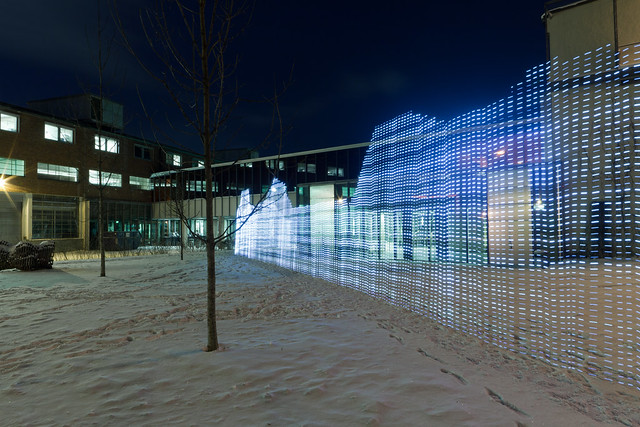
WiFi Measuring Rods, Oslo School of Architecture
Making WiFi Visible - Network City
Robert Shields, 10/6/11
Note: The above post provides a link to Making 'Immaterials: Light painting WiFi', a post written by Einar Sneve Martinussen the YOUrban blog. YOUrban is a research project at the Institute of Design within the Oslo School of Architecture and Design.
Sound, Space and the City
Catherine Scheelar, 10/10/11
Sound, Space, and the City: Civic Performance in Downtown Los Angeles
"In Sound, Space, and the City, Marina Peterson explores the processes-from urban renewal to the performance of ethnicity and the experiences of audiences--through which civic space is created at music performances in downtown Los Angeles."
Mapping Flickr Photos and Twitter Tweets
Rob Shields, 7/20/11
RELATED/SOMEWHAT RELATED
Cognitive Cities Conference
Adam Greenfield's Presentation
WiFi Measuring Rods, Oslo School of Architecture
Making WiFi Visible - Network City
Robert Shields, 10/6/11
Note: The above post provides a link to Making 'Immaterials: Light painting WiFi', a post written by Einar Sneve Martinussen the YOUrban blog. YOUrban is a research project at the Institute of Design within the Oslo School of Architecture and Design.
Sound, Space and the City
Catherine Scheelar, 10/10/11
Sound, Space, and the City: Civic Performance in Downtown Los Angeles
"In Sound, Space, and the City, Marina Peterson explores the processes-from urban renewal to the performance of ethnicity and the experiences of audiences--through which civic space is created at music performances in downtown Los Angeles."
Mapping Flickr Photos and Twitter Tweets
Rob Shields, 7/20/11
RELATED/SOMEWHAT RELATED
Cognitive Cities Conference
Adam Greenfield's Presentation
Friday, November 4, 2011
CALL FOR PAPERS: Educational Interfaces, Software, and Technology, ACM CHI 2012
CALL FOR PAPERS
EDUCATIONAL INTERFACES, SOFTWARE, AND TECHNOLOGY 2012
3rd Workshop on UI Technologies and Educational Pedagogy
May 5-6 2012
in conjunction with ACM-CHI 2012, Austin, Texas
This will be our third annual workshop in conjunction with CHI 2012.
One of the primary goals of teaching is to prepare learners for life in the real world. In this ever changing world of technologies such as mobile interaction, cloud computing, natural user interfaces, and gestural interfaces like the Nintendo Wii and Microsoft Kinect, people have a greater selection of tools for the task at hand. Teachers and students can leverage these tools to improve learning outcomes. Educational interfaces and software are needed to ensure that new technologies serve a clear purpose in the classrooms and homes of the future.
Since teachers are always looking for creative ways to engage 21st century learners, there needs to be an academic venue for researchers to discuss novel educational tools and their role in improving learning outcomes. This workshop aims at filling this void: combining the pedagogical expertise of the cooperative learning, and learning sciences communities with the technical creativity of the CHI, UIST and interactive surface communities. The objective of this workshop is to become a conference within two years
Topics of interest include:
- Gestural input, multitouch, large displays
- Mobile Devices, response systems (clickers)
- Tangible, VR, AR & MR, Multimodal interfaces
- Console gaming, 3D input devices
- Co-located interaction, presentations
- Educational Pedagogy, learner-centric, Child Computer Interaction
- Empirical methods, case studies
- Multi-display interaction
- Wearable educational media
Website: http://smarttech.com/eist2012
Contact: Edward Tse, SMART Technologies, edwardtse@smarttech.com
Workshop Organizers: https://sites.google.com/site/eist2012/home/organizers
Important Dates: https://sites.google.com/site/eist2012/home/dates
Friday, June 17, 2011
LINKS AND UPDATES: Emerging and interactive technologies/apps, related posts
- I haven't been able to keep up this blog due to a very busy schedule. The good news is that I've continued to keep up with my Interactive Multimedia Technology blog - below is a list of links to posts spanning across the past few months that I cut and pasted into this post. Enjoy!
- An Internet of Old Things as an Augmented Memory S...
- In case you missed this: Microsoft Releases Kinec...
- Summer Blogging Plans - Lots of interesting update...
- A few interesting tech links from Experienta/Putti...
- Quick Links: On-line interactive science resource...
- Interactive Multimedia: Music, Videos and Ads -Cho...
- Fun, weird, and a little scary: "Baaa" and "Cows&...
- Top 10 All-Time Posts on the Interactive Multimedi...
- NEWSEUM, a highly interactive museum in D.C. with ...
- Quick Link: Florida's Technology Integration Matr...
- The Digging Into Data Challenge and List of Online...
- StoryVisit: Read and enjoy web-based stories whil...
- Quick link: Edublogger Bill Ferriter's posts abou...
- Display Week 2011 Recap: (Society for Information ...
- CHI 2011, Bill Buxton, and the Buxton Collection: ...
- humanaquarium at CHI 2011
- Johannes Schoening's CHI 2011 Highlights, Linkfest...
- Exploring Social Media Literacies in Teaching and ...
- Update from #CHI 2011 - much more to come.
- CHI 2011! - Today's Highlights from the ACM CHI Co...
- Allison Druin's Workshop Keynote: "Mining the Ima...
- At CHI 2011 - workshop starts soon!
- Futurecasting and Science Fiction at Intel: Video ...
- CHI 2011 Workshop Program and Related Links: UI Te...
- TEDTalk: Carlo Ratti, of MIT's SENSEable City Lab ...
- Play with Dynamic Views of my Blog: Snapshot, Mos...
Calming Technologies Research, Stanford University
- Take a short break to enjoy a performance by the KAIST Mobile Phone Orchestra
- "Visualize This": Nathan Yau's (FlowingData) book...
- Are girls allowed in Google's tool shop? Just wondering
- CALL FOR PAPERS: Touch the Web 2011 2nd Internatio...
- Links - Web of Things: Touch the Web 2011; Web Pa...
- Virtual History of Rome for the iPad, Created with...
- Program- CHI 2011 Child Computer Interaction: 2nd ...
- SIFTEO, the next-gen Siftables! (Tangible User I...
- The New Media Consortium Needs Examples of K-12 Te...
- A few links to start the week: AR for libraries, ...
- Multitouch and Gesture News (Part I) : NUITEQ Upda...
- Bill Gerba's Words of Wisdom about Digital Media C...
- iPad: A couple of good articles about the enchanti...
- Regional Multimedia News: Blind Squirrel Digital ...
- SUPERMOON: Video from NASA, Links
- Cute TV Commercial! Intel Gesture Recognition Tech...
- Words of Wisdom from Ira David Socal: "Writing wit...
- Could your child have a Geminoid for a teacher som...
- Designing For Children: Good article by Catalina N...
- Monday Musing and Meanderings: Interesting videos ...
- Post from TechPsych blog: How about some iPad 2 a...
- Window Shopping in the Web Outside: Interactive Wi...
- New DOOH: TouchTunes Touch Jukebox and TouchTuneM...
- Video: Gesture Interactive Window Display at a Re...
- Video: Kinect at the Supermarket - Supporting "Sa...
- More Eyetracking! Lenova's Laptop Prototype Incor...
- Game Accessibility Example: Control Sims 3 with yo...
Subscribe to:
Posts (Atom)




