Monday, December 24, 2012
Merry Linkfest!
Enjoy!


Wednesday, June 30, 2010
Cisco's Cius, An Ultra-Portable, Android-based Mobile Collaboration Business Tablet: Supports Real-time, HD Videoconferencing, and the "Cloud"

Credit: Wired Gadget Lab, CISCO
Here is a promotional video from Cisco that provides a few scenarios that highlight how the Cius can be used in a cloud-computing business environment. The Cius provides mobile telepresence capabilities. It runs on the open-architecture of the Android operating system.
Here is a video, recently uploaded by someone attending the from the "reveal":
Cisco Cius Demo at Cisco Live
From the CISCO Cius website:
- 802.11a/b/g/n Wi-Fi, 3G/4G data and Bluetooth 3.0 help employees stay connected on and off-campus
- HD video (720p) with Cisco TelePresence solution interoperability for lifelike video communication with the simplicity of a phone call
- Virtual desktop client enables highly secure access to cloud-based business applications
- Android operating system, with access Android marketplace applications
- Collaboration applications including Cisco Quad, Cisco Show and Share, WebEx, Presence, and IM
- 7” diagonal, high-resolution color screen with contact-based touch targets delivers an elegant, intuitive experience
- HD Soundstation supports Bluetooth and USB peripherals, 10/100/1000 wired connectivity and a handset option
- Detachable and serviceable 8-hour battery for a full day of work
- Highly secure remote connections with Cisco AnyConnect Security VPN Client
- HD audio with wideband support (tablet, HD Soundstation)
UPDATE
Pictures are from Jason Hiner's blog at Tech Republic:


Sunday, December 20, 2009
Urban Screens Conference & Exhibition: Call for Interactive Media and Video Art (2010, Toronto, Sept. 24-30) Cross Post
I've been fascinated by urban screens for a while, and this is a passion that is shared by a growing number of people who come to the "screenspace" from a wide range of disciplines. I received an email this morning about a call for interactive media and video art for the 2010 Urban Screens conference and exhibition that will be held in Toronto between September 24th-30th 2010. This is a great reason to plan ahead for a trip to that fantastic city!
Below is a description of the urban screens concept, the details for potential conference and exhibition partipation, and a section of links and resources related to this topic.
The theme of the conference is "I am here; what can we do?"
"Public screens – or rather large screens situated in public space – are proliferating in cities all over the world. How should we understand the emergence of the electronic screen from the domestic interior onto the streetscape of contemporary cities? What are the implications of the merging of screens with architecture, which turns the surface into a communication resource? How will the overlap between streetscape and datascape shape public space in the future?
– Scott McQuire, “Mobility, cosmopolitanism and public space in the media city” (2009).
"Urban screens are digital displays and visual interfaces situated in urban public spaces. They include LED screens and signs, plasma screens, projections, information terminals as well as intelligent architectural surfaces and media facades. They support the idea of using public space as a platform for creation and cultural exchange, strengthening the local economy and encouraging public interaction and discussion." - Urban Screens Association
Call for Interactive Media And Video Art
The exhibition “I am here; what can we do?” is part of Urban Screens Toronto 2010, an international urban screens conference and exhibition taking place between September 24th-30th 2010; produced in collaboration with the International Urban Screens Association (IUSA).
Urban Screens Toronto 2010 will promote a multifaceted approach to exploring the growing appearance of moving images in urban space and the global transformation of public culture in the context of networked forms of urban screens. It will build on the successful events held in Amsterdam, Manchester, and Melbourne and will be the first international Urban Screens conference held in North America.
Through an integrated program of keynote lectures, panel sessions, workshops, curated screenings and multimedia projects, it will bring together leading Canadian and international artists and curators, architects and urban planners, designers, ad agencies and brand managers, screen operators and content providers, academics, activists, policymakers, technology manufacturers, software developers and more.
I am here; what can we do?
Public Call For:
New or existing experimental, interactive artwork suitable for urban screens.
Short-format video works relevant for presentation on urban screens.
Interactive design & advertising works created for urban screens including past commercial interactive work from advertising agencies and designers.
Student work interactive and video work by students from any institution worldwide.
Themes include, but are not limited to: The meeting point of the real and the virtual; work that incorporates media technology and contemporary building/architectural technology; user-generated content; multi-site, networked projects; work that addresses public spaces and civic engagement.
IMPORTANT INFORMATION:
Submission deadline: MARCH 1 2010
Submission format: Please submit PDF files only, no larger than 3 MB.
Proposals should include:
1) Brief 50-word summary of your artwork
2) Full proposal or description of the project (maximum 2 pages)
3) Maximum 10 images and URL where work can be found online if applicable
4) Documentation of this work if it has previously be exhibited, or of another exhibited work by the artist.
3) Detailed list of technical requirements
4) Curriculum Vitae (maximum 3 pages)
Fees: There is no entry fee. Reasonable presentation fees will be paid, for new and existing interactive work and videos. Fees will not be paid for design & advertising work. Students will not receive a fee, but will be automatically considered for a prize. Please note that we cannot fund the creation of new work.
Submit; In the subject line please write URBAN SCREENS PROPOSAL
Email to JURY at: urbanscreenstoronto@gmail.com
The jury will be comprised of Toronto Urban Screens committee members Michelle Kasprzak, Janine Marchessault, Gabe Sawhney, Suzanne Stein and Sharon Switzer.
Notification: April 1, 2010
RELATED
International Urban Screens Association
Urban Screens Blog
Urban Screens' Resources
Urban Screens '09 Videos "The City as Interface"
Urban Screens' Blogroll
Digital Urban
Infosthetics
Interactive Architecture
Luminapolis
The Mobile City
Urban Projection
Visual Foreign Correspondents
We make money not art
Urban Screens Reader
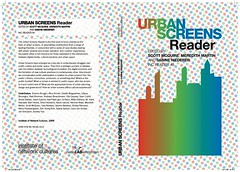
I'm re-visiting all of the above blogs and will share what I find after I surface from the digital rabbit-hole!
Thursday, October 8, 2009
Mobile Art && Code Workshop, November 6-8, Carnegie Mellon University.
The following information is from the MOBILE ART CODE Ning social network.
Art & & Code is an event series and online community dedicated to the democratization of computer programming for artists, young people, and the rest of us.
This November 6-8, we continue our successful workshop/lecture series with MOBILE ART & & CODE: Mobile Media and Interactive Arts - a symposium on the aesthetic and tactical potentials of mobile, networked and locative media. The three-day event will feature intimate, practical, arts-oriented programming workshops for popular mobile platforms (such as the iPhone, Android, Nokia Smartphones, Arduino, SMS, and Asterisk PBX systems) along with an all-day series of free lecture presentations that contextualizes the use of these technologies in a variety of contemporary critical, artistic and design practices.
MOBILE ART && CODE is made possible by a generous grant from Microsoft Research, with oversight by the Center for Computational Thinking at CMU. The ART && CODE symposium series is a project of the CMU STUDIO for Creative Inquiry, directed by Golan Levin. If you have questions or concerns about MOBILE ART && CODE, please email Golan Levin at golan@andrew.cmu.edu.
MOBILE ART && CODE is a symposium on the artistic and tactical potential of mobile, networked and locative media: November 6-8, 2009 at CMU!
Conference Schedule
6 Nov (Fri): Three-Hour Workshops, 9am-Noon and 2pm-5pm ($75/ea.)
7 Nov (Sat): Free All-Day Artist Presentations + Evening Performances
8 Nov (Sun): Three-Hour Workshops, 9am-Noon and 2pm-5pm ($75/ea.)
Workshop Schedule for MOBILE ART CODE:
| WORKSHOPS | Instructors | Friday 11/6 AM (9am-12) | Friday 11/6 PM (2-5pm) | Sunday 11/8 AM (9am-12) | Sunday 11/8 PM (2-5pm) |
| Introduction to Arduino | Gaye | $75 + 75m | $75 + 75m | ||
| Design Tech. for Mobiles | Bleecker | $75 | $75 | ||
| FlashLite on Mobiles | Kam et al. | $75 | $75 | ||
| iPhone + openFrmwks. | Akten & Gage | $75 | $75 | ||
| Interactive SMS | Evans | $75 | $75 | ||
| Python + Nokia | Scheible | $75 | $75 | ||
| Interactive Telephony | Van Every | $75 | $75 | ||
| Android + Arduino | Anderson & Marlinspike | $75 + $120m | $75 + $120m | ||
| Scrapyard Challenge! | Brucker-Cohen & Moriwaki | $75 + $50m. Note: 6 hours. | |||
| Master's Seminar | Behrendt, Paulos et al. | $75 | $75 | ||
| iPhone + Pure Data | Steiner | $75 | $75 | ||
| How to Make Ringtones | Foley | $25 | |||
Some of the workshops do not require any programming experience, and only two (iPhone + OpenFrameworks and Android + Arduino) recommend that participants have some programming experience.
Cross-posted on the Interactive Multimedia Technology blog.
Saturday, September 26, 2009
Near Field Communication Touch Interaction
From the Interactive Multimedia Technology blog:
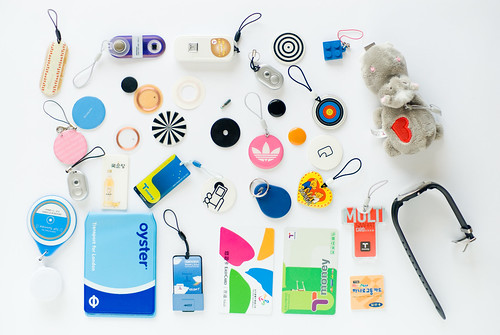
The Touch Project is based in the Interaction Design department of the Oslow School of Architecture and Design in Norway. "Touch is a research project that investigates Near Field Communication (NFC), a technology that enables connections between mobile phones and physical things. We are developing applications and services that enable people to interact with everyday objects and situations through their mobile devices. Touch consists of an inter-disciplinary team involved in social and cultural enquiry, interaction/industrial design, rapid prototyping, software, testing and exhibitions." -
Nearness Explores Interaction Without Touching
Nearness from timo on Vimeo.
iPhone RFID: Object-based media
iPhone RFID: object-based media from timo on Vimeo.

reTouch Info Sheet (pdf)
reTouch is part of the Touch project, and it " brings together hundreds of cross-cultural examples of social norms and values involving touch—all categorised according to actions related to touching. Using quotes from ethnographic accounts written between the late 1800s and the present, re/touch encourages designers and researchers to explore how touch is used by people to relate to one another and the worlds in which we live. Browse re/touch to create design briefs, refine interaction scenarios, devise game play, or otherwise think, make and do things touchrelated." -reTouch web info, Anne Galloway.
One of the members of the research team is Anne Galloway, a social researcher and the author of the purselipsquarejaw blog, which she recently resurrected after taking a year off from blogging.
Anne also contributes to the space and culture journal. I've followed Anne's writing for a while. Over the course of her Ph.D. studies, she has thought deeply about the intersections of technology, space, and culture, including cross-cultural meanings of touch.
RELATED
Inspiring Touch Related Interaction Design

Original Design Thinking Approach for Researching RFID
-Nikolas Nova, Pasta and Vinegar
Note: Nikolas Nova's Pasta and Vinegar blog is worth taking a look at if you are interested in design, UX, emerging technologies, pervasive/ubiquitous computing.
About Nikolas and his blog:
"User Experience researcher at LIFTlab. My work is about studying how people use various technologies and turn them into insights, ideas, prototypes or recommendations to inform design and foresight.This blog is a selection of the material that I collect, especially in fields such as mobility, urban environments, digital entertainment and new interfaces. I am also part of the near future laboratory."
Sample of Pasta and Vinegar Posts:
(Touch) Interaction Vocabulary
A Graphic Language for Touch-based Interactions
Saturday, September 5, 2009
The World is My Web Browser: Interactive Technology in Public Spaces
Off-the desktop Interactive technologies are spreading quickly, across many platforms. It seems that within the next 3-5 years we will be able to have instant access to a social and dynamic web, with information and entertainment at our fingertips, anywhere we go.
The "world-as-web-browser" concept is one I've touched upon in the past. I'd like to focus on this topic in future posts.
I came across some of the information in this post on the Future of Media Blog,maintained by the folks at the Interpublic Emerging Media Lab, based in California. This blog is a must-read!
The Saatchi & Saatchi ad agency in the UK created interactive games that provide people waiting in bus shelters the opportunity to pass the time by bashing digital falling eggs.
A more utilitarian approach to interactive touch screens is the EyeStop bus stop, a concept created by researchers MIT's SENSEable City Lab, along with the city of Florence and the city's transit service:

MIT

MIT researchers unveil the EyeStop: "Bus stop of the future" can sense its surroundings (pdf)

SOMEWHAT RELATED
IPG Future of Media Blog
(Cross-posted on the Interactive Multimedia Technology blog.)
Friday, August 7, 2009
Play Foursquare?! Interactive Local + Social Media Coming to a City Near You.
Foursquare is a locative-mobile system/game/social media game/activity that is starting to grow in popularity in a number of urban settings, such as NYC. It hasn't arrived in Charlotte, so I can only share what I've gleaned about it from the Foursquare website and a few reviews:
"We're all about helping you find new ways to explore the city. We'll help you meet up with your friends and let you earn points and unlock badges for discovering new places, doing new things and meeting new people."
"It's foursquare! Think: 50% friend-finder, 30% social cityguide, 20% nightlife game. We wanted to build something that not only helps you keep up with your friends, but exposes you to new things in and challenges you to explore cities in different ways. There's a lot of experimenting here, so bear with us as we try to figure it all out (and thanks!)"
"We have an iPhone app, a mobile-web site (Blackberry! Treo!) and an SMS shortcode (50500) that you can text check-ins to. For more info, look here." (For more information, visit the Foursquare NYC website.)
RELATED:
Foursquare: Check In, Tweet....Money on Beer (Jennifer Van Grove, Mashable, 8/7/2009)
"Foursquare is poised to be a prime player in the location-based social networking space."
Forsquare: Why it May Be the Next Twitter (Jennifer Van Grove, Mashable, 7/25/2009)
"The Game: To those of you not playing, it may sound like a joke, but don’t knock it till you try it. You earn points for every check-in — unless of course you check-in at the same locale all the time. You’re rewarded with more points for being adventuresome (exploring different parts of the city), for hitting up multiple spots in one night, and eventually for the tips other people try and the to-dos you complete."
Screen-shot from Jennifer Van Grove's Foursquare App:
Building an Army of Hyper-Local, Mobile-Connected Advocates: Or, Why Marketers Should Pay Attention to Foursquare (Allison Mooney, Ad Age Digital, 8/5/09)
"Co-founder Dennis Crowley puts it this way: "I think Foursquare found some kind of sweet spot between the intersection of social utility (Hey, I know where my friends are), sharing/oversharing (I log everywhere I go/everything I do) and gaming/rewards (every check-in gives you a little piece of candy)."
Foursquare is designed with these game dynamics in mind, and it's the absurd appeal of its reward that makes the service so "sticky.""
Naveen Selvadurai (Foursquare Co-Founder)Cities: Amsterdam, Atlanta,Austin, Boston, Chicago, Dallas/Ft. Worth, Denver, Detroit, Houston, Las Vegas, Los Angeles, Miami, Minneapolis/St. Paul, NYC, Philadelphia, Phoenix, Portland, San Diego, San Franscisco, Seattle, Washington D.C.
(Also posted on the Interactive Multimedia Technology blog.)
Tuesday, July 14, 2009
Video Clip: Nokia's Study of Gestures Around the World (6th sense?)
The video explains it all.
The video is from the Nokia Conversations YouTube channel.
(Fritz Desir, thanks for the link!)
Friday, April 10, 2009
Sprint's Welcome to the Now Network: "What's Happening Now" Infographic-like Commercial
I saw this commercial last night and thought I'd share it.
Tuesday, March 24, 2009
The interaction that had me at "hello world": SixthSense TED presentation by Pattie Maes, of MIT's Fluid Interfaces Group

Photo Via Google Images
Although research about multi-touch and gesture interaction has been going on for many years, it took the release of the 2002 movie Minority Report to fuel the recent mini-explosion of interest. Members of MIT's Fluid Interfaces Group have been working on projects that are making the science fiction of the film a reality, and at a reasonable price.
(Similar post on the Interactive Multimedia Technology blog)
In the following video, Pattie Maes and Pranav Mistry,of MIT's Fluid Interfaces Group, demonstrate SixthSense, wearable technology that incorporates a video camera, a projector, a digital camera. I especially like this application because it supports multi-touch and multi-user interaction. Although it is in the prototype/demo stage, it looks like it is a mobile technology that has potential.
From the SixthSense website:
"The SixthSense prototype is comprised of a pocket projector, a mirror and a camera. The hardware components are coupled in a pendant like mobile wearable device. Both the projector and the camera are connected to the mobile computing device in the user’s pocket. The projector projects visual information enabling surfaces, walls and physical objects around us to be used as interfaces; while the camera recognizes and tracks user's hand gestures and physical objects using computer-vision based techniques. The software program processes the video stream data captured by the camera and tracks the locations of the colored markers (visual tracking fiducials) at the tip of the user’s fingers using simple computer-vision techniques. The movements and arrangements of these fiducials are interpreted into gestures that act as interaction instructions for the projected application interfaces. The maximum number of tracked fingers is only constrained by the number of unique fiducials, thus SixthSense also supports multi-touch and multi-user interaction."


Sunday, March 22, 2009
The Lucid Project: Internet of Things, Mobility, and Context Aware Services
The following picture, from Open Gardens, shows how our mobile devices can be used to interact with the "Internet of Things", also known as the "Web of Things":
The Open Gardens blog is authored by Ajit Jaokar.
The slides below are from one of Jaokar's presentations about the impact of open source technologies and mobile communication:
Related to this topic is the concept of mobile social software, also known as MoSoSo. For more information read this paper about Mobile Social Software, a thesis written by Clint Heyer.
Monday, September 1, 2008
UNICEF's "Bee" Mobile Emergency Communication System
The following video clip is of UNICEF's "Bee" prototype, a mobile emergency communications system designed for deployment in communities during disasters and emergencies:
"Bee" system prototypes represent the future of connectivity in emergencies.
- "The system is designed to work within UNICEF's 'build back better' policy of helping families and communities recover from emergencies. While the components of the Bee are intended initially to facilitate crisis-response operations, they are eventually to be left behind and integrated into the community's monitoring, evaluation, education and health programmes."


The system allows for registering children during emergencies.
The solar-powered emergency system communication hub also functions as a temporary digital school-in-a-box, with access to to educational content through satellites and mobile networks.


BEE prototype; Low Tech School-in-a-Box
Friday, March 14, 2008
Nokia's Morph Prototype and Concept
I have a Nokia n800 internet tablet that I've grown to appreciate over the past few months. Although I really wanted an iPhone or an iPod Touch, I settled for the Nokia because it had quite a few features for the price.
It looks like there will be more options for me when I'm ready for my next hand-held device.
Darren Waters, the author of the dot.life blog, covers technology from BBC news. He recently had the opportunity to visit Nokia's lab in Palo Alto to learn more about the future of mobile technology. According to Darren, the people at Nokia call cell phones and hand-held devices multimedia computers.
To get a better picture of what is going on at Nokia, take a look at this video about Morph:
"...Morph is a concept looking at the potential applications of nanosciences in future handsets."
"From nanowires that can sense the chemical properties of compounds in the air to nanowire grass that can turn the sun's rays into electrical power, and nanoelectronics with greater computing power than today's fastest computers, Morph is a beguiling vision."
Is the world ready for this? I think so.




